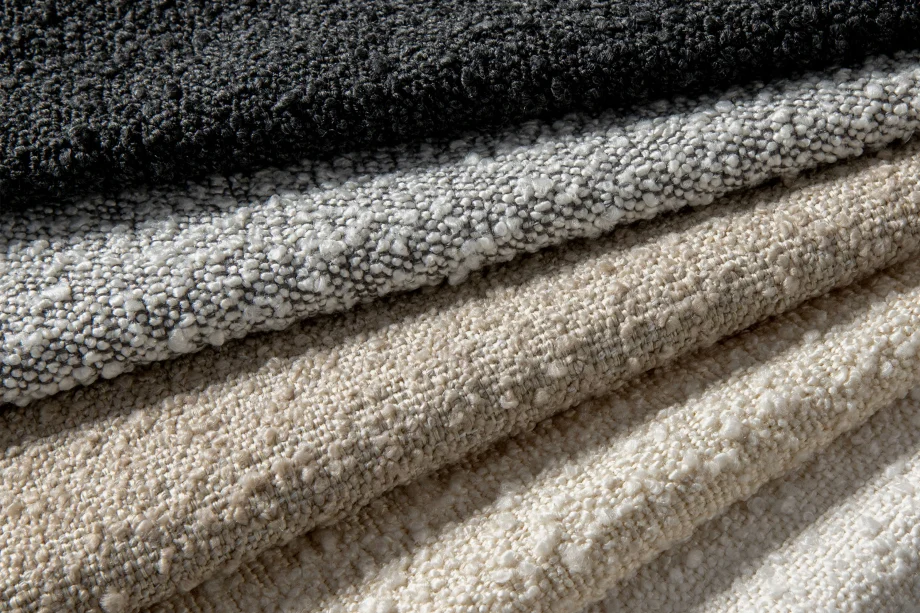
Boucle fabric derives its name from the French term for curl or loop, featuring raised looped yarns that create a distinctive nubby surface ideal for both upholstery and apparel. These loops form through uneven twisting during yarn production, delivering a texture that combines softness with visual depth and subtle resilience.
Manufacturing Process of Boucle Fabric
Producers select fibers including wool, mohair, cotton, acrylic, or blends before spinning them at inconsistent tensions to generate the signature loops. Looms or knitting machines then interlace these yarns, with modern variants incorporating recycled content to minimize waste. Quality control ensures loop uniformity, preventing snags while maintaining the fabric’s tactile appeal. Advanced machinery allows precise loop sizing, influencing final drape and insulation properties.
Key Characteristics of Boucle Fabric Texture
The looped structure traps air pockets that enhance thermal regulation and provide a plush hand-feel without excessive weight. This texture resists pilling better than many knits yet shows natural variation that adds character. Boucle offers moderate stretch and excellent recovery, making it suitable for form-fitting garments or structured seating. Its matte finish diffuses light softly, contributing to elegant aesthetics in interior settings.
Varieties and Fiber Options in Boucle
Wool boucle delivers superior warmth and durability for winter coats or throws. Mohair versions introduce a subtle sheen and luxurious softness prized in high-end sofas. Synthetic acrylic boucle provides affordability and easy maintenance for everyday furniture. Cotton blends create lighter options perfect for summer upholstery or casual jackets. Patterned boucle incorporates multicolored loops for visual interest in modern designs.
Applications in Interior Design
Designers favor boucle for accent chairs and ottomans where the texture invites touch and adds dimension to neutral palettes. Sectionals upholstered in boucle withstand daily use while maintaining visual appeal over time. Throw pillows and headboards benefit from its sculptural quality that elevates minimalist spaces. Commercial spaces employ boucle wall panels for acoustic benefits alongside style.
Fashion Industry Utilization of Boucle
Coat makers rely on boucle for structured outerwear that balances warmth with lightweight construction. Skirt and trouser collections use lighter boucle weaves for textured separates that transition across seasons. Accessories such as bags and hats showcase the fabric’s loop detail for artisanal appeal. Runway collections often highlight boucle in sustainable lines emphasizing natural fiber origins.
Durability Factors and Performance
Loop density directly impacts abrasion resistance, with tighter constructions lasting longer in high-traffic areas. Stain resistance varies by fiber treatment, allowing many boucle pieces to handle spills effectively. UV exposure may fade colors gradually, recommending protective linings for sunlit furniture. Proper construction prevents loop unraveling, ensuring longevity across repeated cleanings.
Care and Maintenance Guidelines
Vacuum regularly with upholstery attachments to remove dust from loops without flattening texture. Spot clean with mild detergent solutions tested on inconspicuous areas first. Professional dry cleaning suits wool or mohair boucle to preserve fiber integrity. Avoid excessive heat during drying to prevent shrinkage or loop distortion. Rotate cushions periodically for even wear distribution.
Environmental Impact and Sustainability
Sourcing from regenerative wool farms reduces land degradation associated with boucle production. Recycled polyester boucle lowers reliance on virgin petroleum while matching performance standards. Water usage in dyeing processes has decreased through closed-loop systems adopted by leading manufacturers. Consumers can extend product life through repairs, supporting circular economy principles in textile consumption.
Comparison with Similar Textured Fabrics
Unlike chenille’s velvety pile, boucle maintains distinct loops that resist crushing under pressure. Tweed offers similar nubs but typically features flatter surfaces without boucle’s pronounced three-dimensional effect. Boucle outperforms basic knits in insulation yet requires more careful handling than smooth wovens. Its versatility bridges casual and formal uses more effectively than many specialty textures.
Selection Tips for Quality Boucle
Inspect loop consistency across the bolt to avoid weak spots prone to snagging. Check fiber content labels for blend ratios that match intended use, such as higher wool percentages for outerwear. Request samples to evaluate drape and color under actual lighting conditions. Partner with suppliers offering warranties on performance characteristics like pilling resistance.